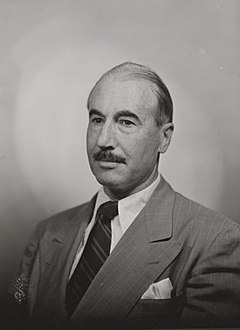
An excerpt from the book Travelling Back by Walter Crocker (1901 – 2002)
(Sir) Walter Crocker was a great grandson of Robert Lindo.
He was Governor of South Australia from 1973 to 1982.
South Australia and beginnings
The scent of eucalyptus, the sound of crows in the distance enhancing the sense of space, the sight of hills on the horizon, dark blue under an unclouded sky and across a landscape burnt brown with the sun-these are what I grew up with and these have conditioned my life. They are the smell and sound and sight of the Australian bush, the place where I was born and my home for my first twenty years. I was living away from them for nearly all of the ensuing half century, in England, in America, in Africa, in Europe and in Asia; but the memory of them never faded. Parnaroo, our small sheep station in South Australia, remained always the resting place for my spirit.
A quiet world where the wireless, television, the motorcar, industrialisation, affluence, unemployment, welfarism, big business, big government, and big boredom had not arrived.
Origins
My forbears, on both sides, were pioneers of South Australia. The Crockers came to the new Province (as the colony was styled) in the 1840s a few years after its foundation. It had a population of only about 20 000 when they arrived. It has over a million today. Robert Crocker, the first of six generations of Robert Crockers in South Australia, having lost his bride in child-birth, decided, as a young widower at the age of 30, to leave England and start another life. His ship, with a burthen of 620 tons, sailed from Plymouth and took five months to make the voyage. Those five hard months, for which his journal still exists, were the introduction to hard years of pioneering. He took up land in Carey Gully, then known as Paddy Carey’s Gully, in the Adelaide Hills. He spent the first two years alone. Then the Pascoe family arrived at Carey Gully from Cornwall and three months later Robert Crocker married Catherine Pascoe.
Two other of my great-grandparents, the Lindos and the Pinnegars, arrived in South Australia a little later, while the fourth, the Brays, arrived last. The Lindos in 1849 settled in Hay Valley, near Woodside, another pretty part of the Adelaide Hills. The Pinnegars settled between what is now Belair and Blackwood, overlooking Adelaide, and the Brays on the edge of the Clare hills, not far from the farm which is my home today.
The England they left was the England of that wonderful book of the young Dickens, Pickwick Papers, published in 1837, the year after the t founding of South Australia. Cobbett’s Rural Rides, published a little earlier, gives the countryman’s detail to Dickens’ picture. Except for the Lindos, my great-grandparents were all West Country people. The Crockers, who spilt over into Dorset, originated from Devon, it is said from Crockemwell, but settled for some generations at Piddletrenthide in Dorset where their tombstones are still to be seen in the churchyard. Crocker is an old West Country name; as Charles Kingsley wrote in Westward Ho:
That famous trio of Devonshire Cs
Crocker, Cruwys, and Copplestone
When the Conqueror came were all at home.
The Lindos came from Norfolk. Robert Lindo, my great-grandfather, the first of the Australian Lindos, was a Christianised Sephardi Jew. He had been disinherited for becoming a Christian and for marrying Jane Wilson, from the Yorkshire Dales. The Lindos belonged to the same group as the Montefiores, the Ricardos and the Mocattas. This was the Jewish community in Spain of whom George Borrow gave a glimpse in his account of Abarbenal in The Bible in Spain. One of the originators of the company which founded South Australia was Sir Moses Montefiore. Montefiore Hill in North Adelaide was named after him. Robert Lindo had great vitality and lived to be ninety-three. But he, no less than his descendants, had little of the Jewish acumen for business. Except for an interlude on the Victoria Goldfields in the ‘Fifties, he spent all his South Australian life in the countryside, sometimes as a farmer, sometimes as a contractor.
My grandfather, Robert Pollard Crocker, was born in Carey Gully and christened in St. John’s Church, East Terrace, Adelaide. He was the eldest of fourteen children; only six of them survived infancy; five died in a two-month period during a diphtheria epidemic. He was a pupil at Crafers school when it was first opened in about 1860-1.
These great-grandparents cleared their land, built their own housing, dug wells or dams, and tried to tame a foreign soil beneath a foreign sky, They did their own doctoring and, over long periods, much of their children’s schooling. Two of my great-grandfathers wasted a year or so in the gold rush in Victoria and were all the poorer for their pains. (In the Fifties for a time about a third of the men in South Australia went off to the gold rush.) My forbears were poor, or poorish, but all were free men, steeped in the traditions of the English yeomanry from which, excepting the Lindos, they came, independent fellows who paid or worked their own way. They had all bypassed the Industrial Revolution.
South Australia had more of this breed among its settlers than any of the British colonies except Nova Scotia, Natal and the South Island of New Zealand. Churchill during World War II, angry over his differences with Curtin, once complained to his entourage that Australians came from bad stock. This was not true of South Australia. All immigrant communities include two main streams in their stock-the independent pioneering fellows, and the flotsam all too ready to live, and especially to drink, on State aid and scrounging. But in South Australia it was the independent men who predominated.
Founded in 1836, South Australia was begun on principles different from those of any of the other five Australian colonies. Most of the credit for the good things belongs to Robert Gouger, one of the few attractive figures among the founding group whom one of its members described pardonably as the veriest buggers’.
In the first place no convicts were allowed. This principle was stuck to right through.
In the second place the land was sold at a fixed price and there was some emphasis on getting a large basic layer of small farmers, each owning his freehold. There were some digressions from principles and not a few dishonesties in practice but the principles did count.
In the third place, the initiative behind the foundation of South Australia came from evangelical, largely nonconformist, capitalists, in association with Montefiore. The high proportion of evangelicals gave a special flavour to the colony, and something of Puritan seriousness. There was no legal establishment of the Church of England though Anglicans formed the majority. Until recently one South Australian in every four was a Methodist. Further, the Germans brought out by Angas, one of the founders, himself a Baptist-Congregationalist businessman from Newcastle, and settled as peasants in the fertile Barossa Valley and at Hahndorf, comprising a tenth of South Australia’s population until World War II, were Lucheran Dissenters. The resulting moral traits, tinged with a reformist outlook and combined with a high literacy rate, recalling the old Huguenot qualities, led to some significant pioneering in social matters, such as votes for women, voting by secret ballot, certain penal reforms, and, in the face of typical opposition from lawyers, the registration of land titles by the simplified system incorrectly associated with the name of Torrens, a South Australian adventurer.
The moral spirit was much needed, for the greediness and land grabbing, though well outstripped in Eastern Australia, were not pretty.
There used to be exaggeration among South Australians descended from those arriving in the province during its first thirty years or so about the social origins or status of the pioneers. This genteelising now seems to be disappearing. A significant truth is that the unusual and unsatisfactory mixture of the South Australian Company, a business venture, with the Government of the Province, allowed normal British Colonial Service rules about officials being debarred from pecuniary interests in the colony where they were serving, to be flouted

