Mary’s second school was Wheatley on the Yorke Peninsula.
She was there for four years1932 -1935 inclusive.
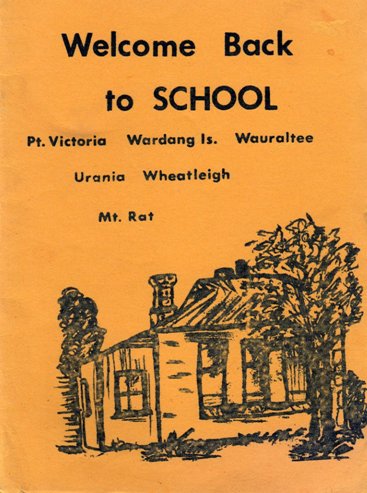
According to this little booklet of Yorke Peninsula Rural Schools, the Wheatleigh School opened in 1915 and was closed in 1947.
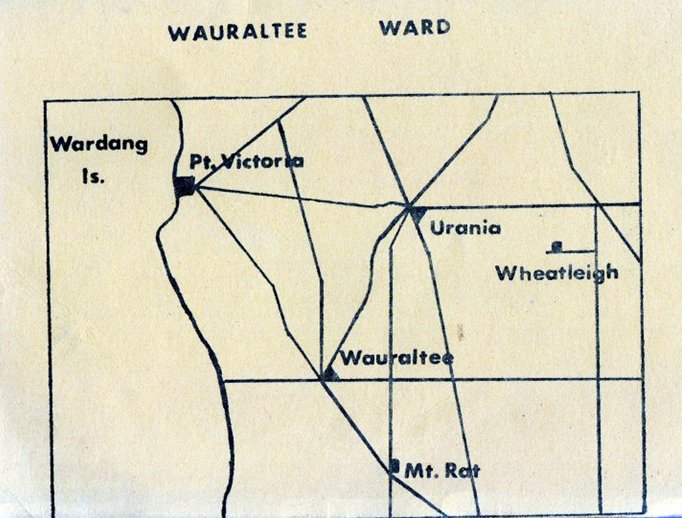
It was one of 6 one- teacher schools in the central area of Yorke Peninsula (the Wauraltee Ward).
The other schools were Wardang Island, Port Victoria , Urania, Wauraltee and Mt Rat. The largest town nearby was Maitland.
In 1915 they knew there were enough children to justify a new school. The families of Linke, Schulze, Nelligan, Hall, Verrall and Edwards each donated 10 pounds towards the cost of building a stone school building and the land was donated by Mr.Nelligan.
Further details of the building of the school were contained in this new booklet for the 1988 reunion
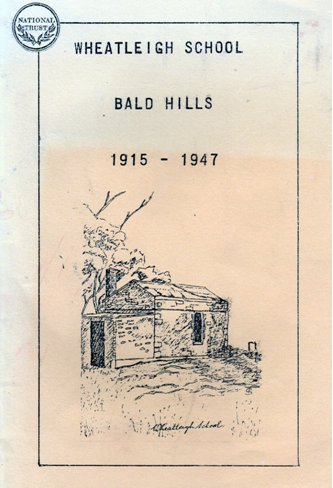
“The parents carted the limestone, from which the porch and school were built, by horse and dray. Lime was burnt at a kiln on the Edwards property. Mr Fred Scholz and his brother assisted by the parents built the school. Mr Scholz was a relative of the Linke family and the Linke children used to take morning lunch to him at the school site. One morning he broke his cup so he built it into the wall of the school”
For around 60 pounds the school was built and opened free of debt. It was rented to the Government who then supplied the teachers. The first class was in 1915.
The school was set high on the hill and sugar gum trees were planted to surround it.
This school was originally called Bald Hills but because there was another area called Bald Hills near Yankalilla the name was changed to Wheatleigh in 1921. Wheatleigh was the name of one of the neighbouring farms.
The area is a grain growing area producing many years of bumper crops of wheat and barley.
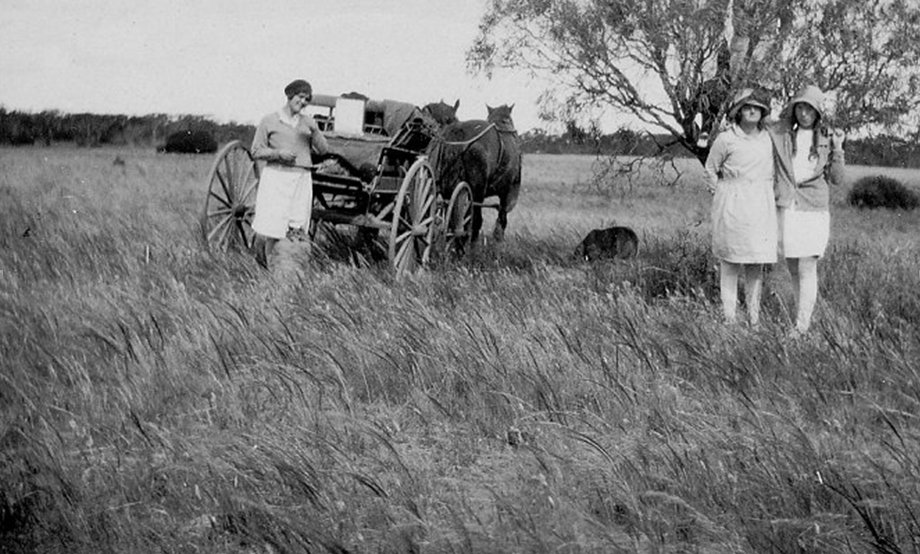
For Mary it was a very different area geographically from the land surrounding New Way School.
However socially it was similar. The country attitude of respect for and welcoming of the new teacher was the same. She appreciated being part of the Wright family at New Way and the Schulz family at Wheatleigh.
Mary enjoyed teaching in both of these schools.
She was skilled in relating very personally to each child and the sense of mutual acceptance, respect and enjoyment was in evidence in both schools.
Mary boarded with the Schultz family for the next 4 years. It was walking distance over the paddocks to school. An easy everyday walk to work.
The family included her in their activities. Without a vehicle, she was dependent on others for being taken to dances, local events, tennis matches, church on Sundays etc.
She appreciated being involved in the social life of the area. Whilst there she developed a very close relationship with Eddie Heinrich. They were engaged by the end of the four years at this school.
Holidays were spent back at The Sheoaks whenever possible.
Wheatleigh on the Yorke Peninsula was much closer to the mid-north than New Way had been. I assume it would have been a coach trip connecting with a train trip to Clare.
The letters between Mary and the Sheoaks would have been constant. The sisters would have been wanting to share the home news of what everyone was doing and Mary wanting to explain the ins and outs of her new life as a teacher. It would have been at least one weekly letter in both directions.
During 1934, Win was married to Oliver Burford. That would have been a very special family event in Watervale.
There were occasional special events. Grace Bagshaw was a friend from Saddleworth and she and Mary planned a holiday together in Tasmania. It would have taken several years to save for this trip. I think their holiday was in 1938ish.
There were only 7 children in the school when Mary started teaching at Wheatleigh.
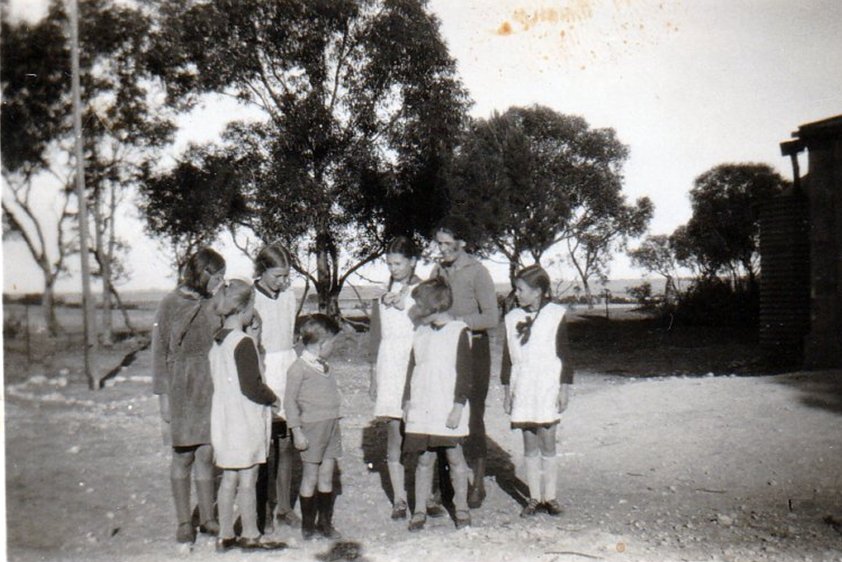
Here, Mary and the children are preparing for a school photograph to be taken in 1932.
The trees had grown well by the time Mary was at the school.
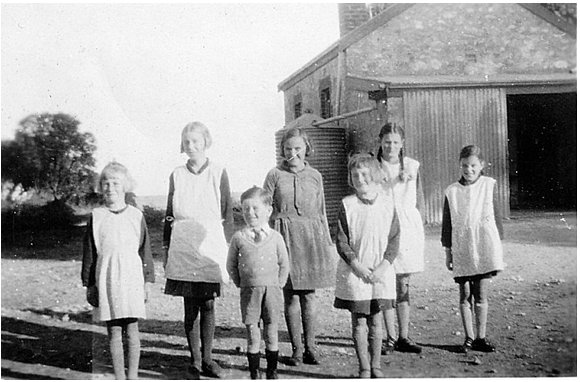
There were 6 girls and one little boy.
In this photo from the left are Kath Fletcher, Edna Burrows, Little John Fletcher or Glen Cook, Gwen Borgemeyer, Eva Fletcher, Kath Andrew, and Pat Andrew.
Numbers were often a problem for this small school. Each school was supposed to be serving 10 or ideally 12 children. Despite this, Wheatleigh survived.
I think “little John Fletcher” was quietly(?) admitted before being 5 which explains why he was referred to as “little John”.
However another comment about this photo was made by Beryl Neumann. She asked Mary “Could the little boy in the photo be Glen Cook? I remember him saying that he was the only boy among six girls.”
So maybe little Johnny or Little Glen?? Does anybody know?
The Rules of Conduct were up on the school walls.
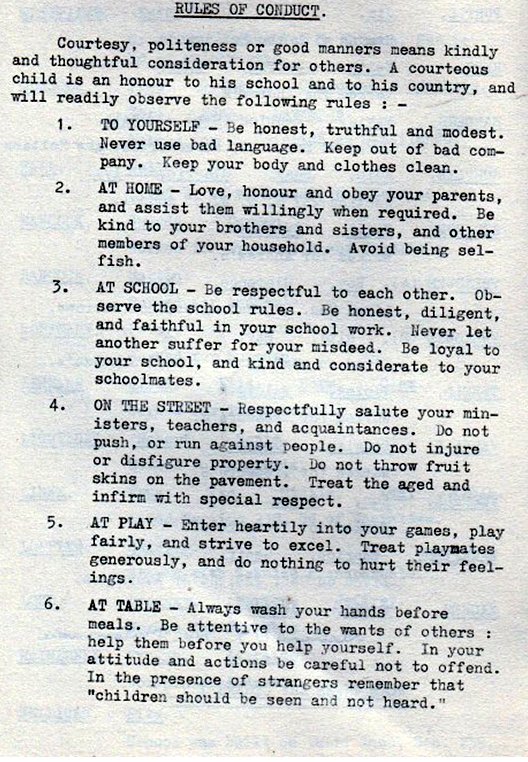
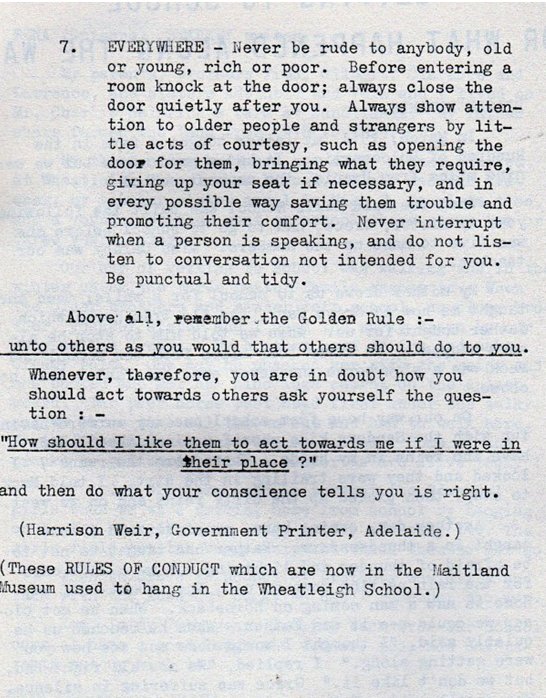
As well as the Rules of Conduct there would have been charts of multiplication tables and maps of the British Empire and Australia: also, drawings, poems and examples of excellent printing and cursive writing. Mary always loved teaching and would have made the room as interesting, stimulating and pleasant as possible.
The following invitation was posted to all ex students and teachers inviting them to participate in the 1988 reunion. It demonstrates the country attitude of welcoming of ideas, memories and contributions of all sorts –including afternoon tea.
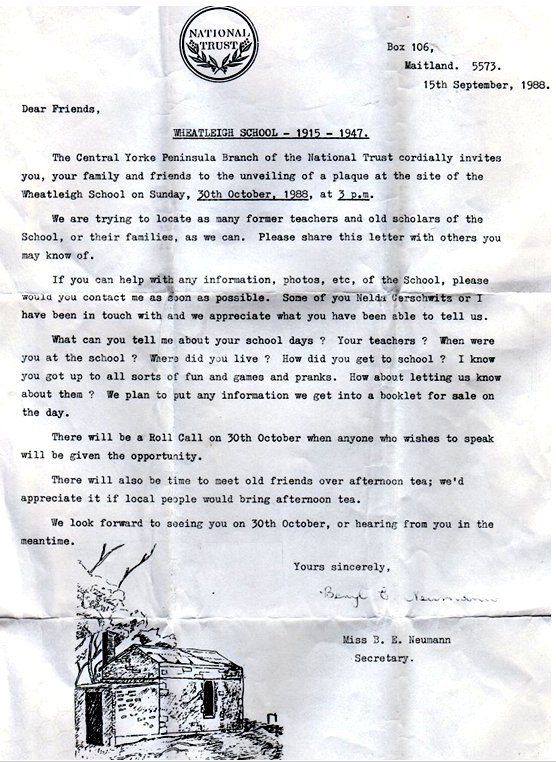
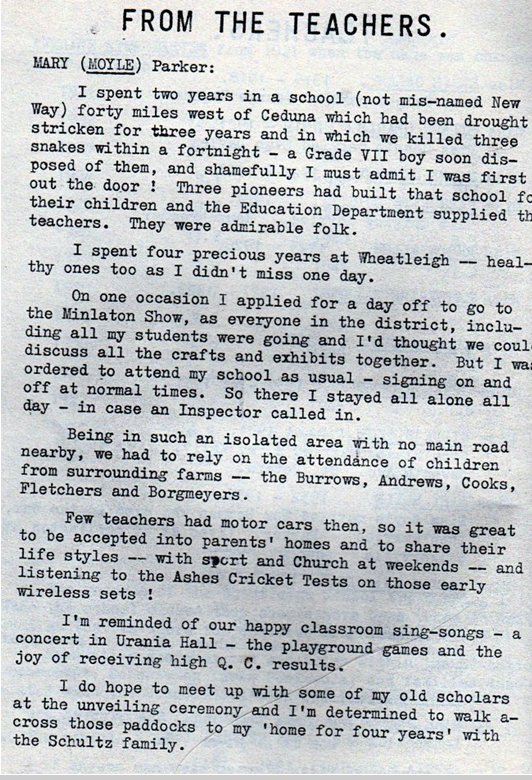
Mary responded to this invitation and wrote a short summary of some memories of her four years at the school.
This writing takes pride of place in the Wheatleigh School booklet .
There’s a photo in here that I cn’t delete or open? I’ve put in another copy. Please remove if you can
This writing has the first mention of Mary’s love of music. The class “singsongs” were obviously a memorable feature. If there were musical instruments available they would have been included. A piano would have been a blessing, but not one of the rural schools where she worked had such a luxury. Never mind, the singing was a delight. And they had a concert at the Urania Hall. Concerts were a favourite form of entertainment in family homes and in the local halls. The families would all have loved these school items in the local concerts.
I notice also the importance of the QC (Qualifying Cerificate) results. There are few records of the lesson content/ curriculum of these small schools. It was a controversial topic in some of the parliamentary debates. I know Mary would have taught English, History, Geography, Arithmetic and tables!! Music and more music. But there are no records I can find.
Colin Thiele in his book “Grains of Mustard Seeds’ (page 148) refers to a criticism being made of the teachers sent to the country schools with only one year teacher training. A man called Gold had commented in “a moment of perception and pessimism that the short courses actually “hindered the life of outback communities”.
The following responses to this criticism by an educator Mr Charlton are gems with sparkling elements of truth.
Charlton commented that “some of the best is to be found in the small far off schools.” “For here and there among the back blocks was a teacher blessed with rare insights and understandings: one who ignored official timetables, ranged widely through the natural world, and on wet days gathered her half dozen bare footed disciples around her before the roaring fire. There while blucher boots and sorely darned socks dried out in front of the flames she read to them all day long –poetry and history and magical stories of ancient Persia, Yucatan or the wastes of Antarctica – until it was time for them to saddle up their hairy hacks or spring cart horses and plunge home through the wins and rain. The educative power of such a person in a one-teacher school was something tat research would never be able to ticket nor all the pedagogues in Christendom analyse successfully. There were unquestionably people living in South Australia who would have said of their outback teacher, as Rex Ingamells did of his Miss Singwood that she “Had, of all people, not even my revered parents excepted, the strongest influence on my life.
Although this is a romantic view it contains elements of truth and many of Mary Moyle’s students I feel sure, would have agreed. I know she would never have mentioned the Yucatan or Persian poetry but the children may well have dried off their socks as they were singing songs or reciting poetry or listening to stories and of course she would have taken advantage of any opportunity to rechant the times tables.
The point is that the South Australian children all had to do the Qualifying Certificate exam at Year 7 level. This was a serious and difficult set of tests. Students needed to pass this in order to be able to proceed to High School. It had question covering General Knowledge, Arithmetic, Grammar, English, History etc.
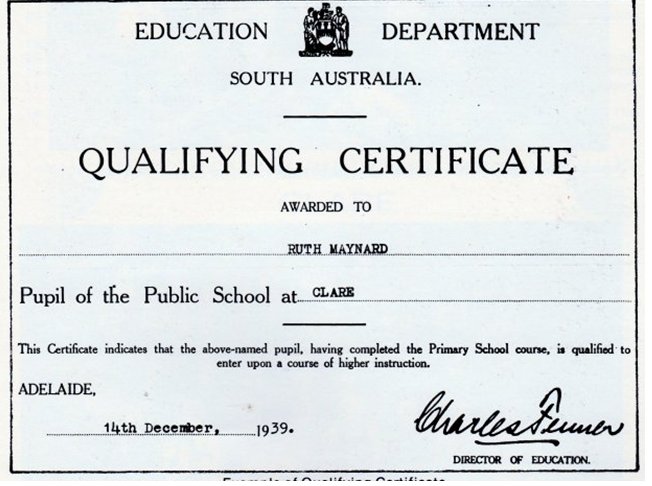
Mary reports that her students had “the joy of high QC results”.
In the reunion booklet, Gweneth Walsh (Nee Borgmeyer) wrote: “I attended from grade IV to Grade VII (around 1936). There were 7 of us at the school and when Cyril Stringer left John Fletcher came to keep the school open.
Mary Moyle was the teacher.
I had to go to Maitland to sit for my QC (Qualifying Certificate). It was so strange. I knew no one and was so very nervous”.
It was a huge hurdle for students. They couldn’t sit for it in their own familiar school environment. But they did it and Mary reports the results were very good. So the curriculum in her school was covered very satisfactorily.
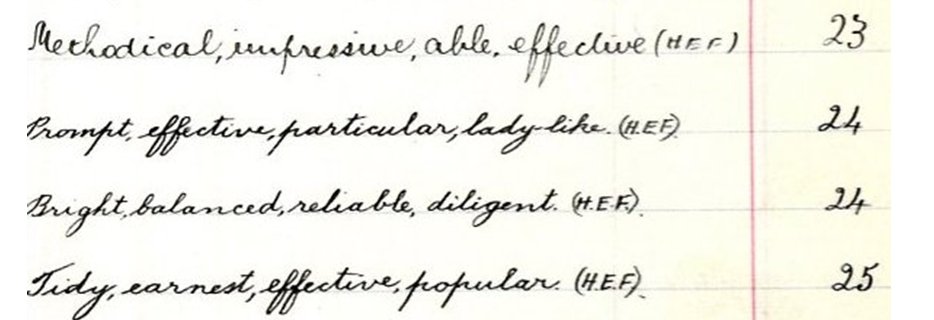
The reports from the inspectors of these 4 years are quite glowing. The points given to her teaching have risen to 25 which I think is the highest they can reach. How she would have loved to have seen these records!
One can’t help but reflect on the difference in today’s high tech society where nobody does a QC at year 7 and even passing year 12 exams is downplayed as an important precursor to university entrance. Up until the 1980s there was great rigor in working to be accepted into High School and then working diligently to be accepted into courses at University level.
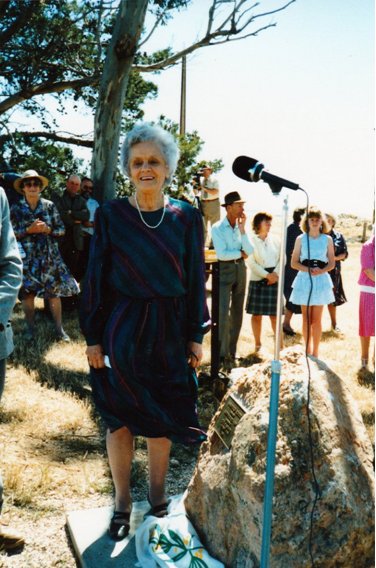
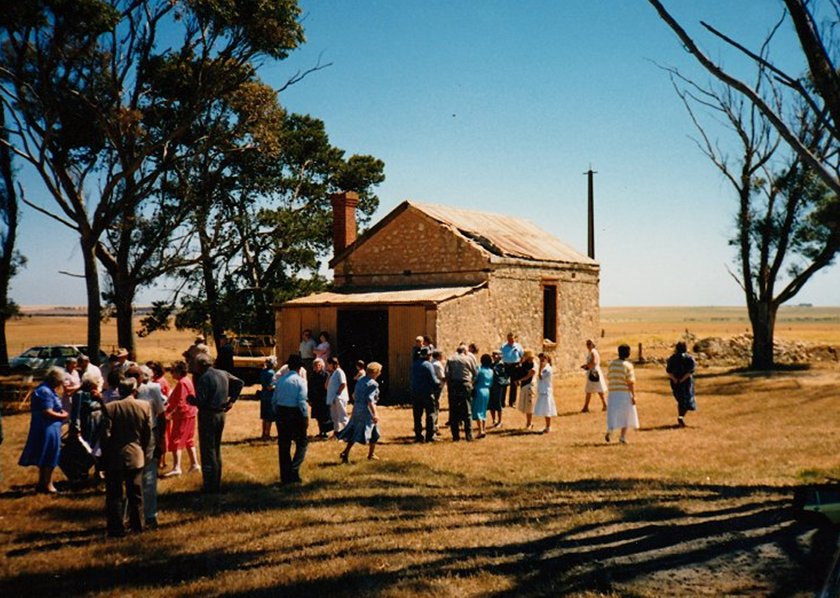
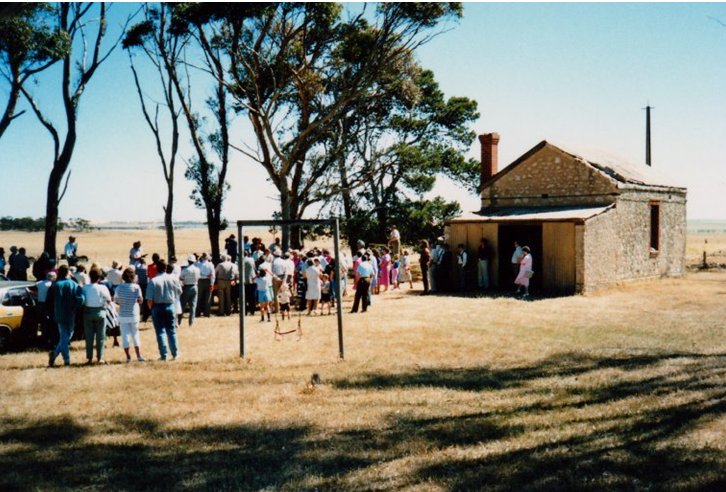
A Wheatleigh school reunion was planned for October 1988. The National Trust gave financial support to this reunion and the creation of a memorial plaque.
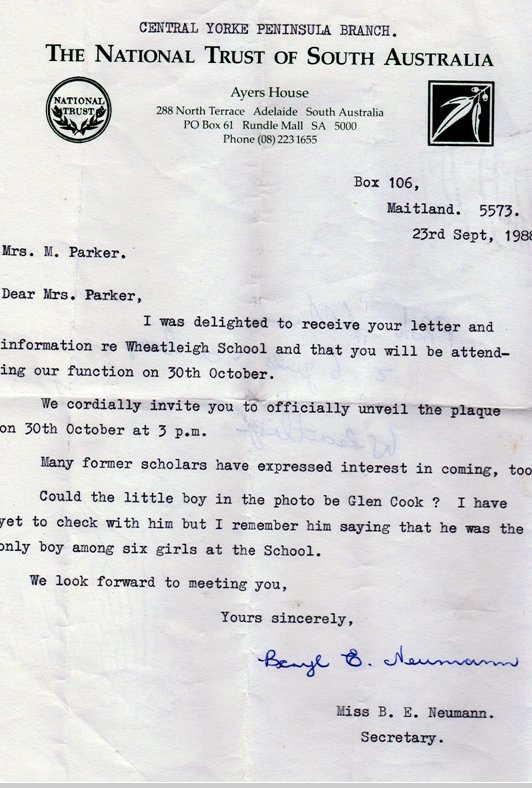
Another letter from Beryl Neumann invited Mary to unveil the plaque.
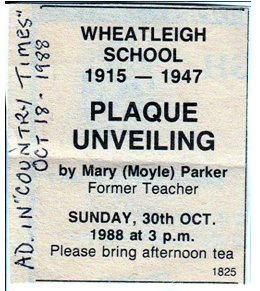
This little ad was in the Country Times in early October 1988
Mary accepted and together we drove to the York Peninsula.
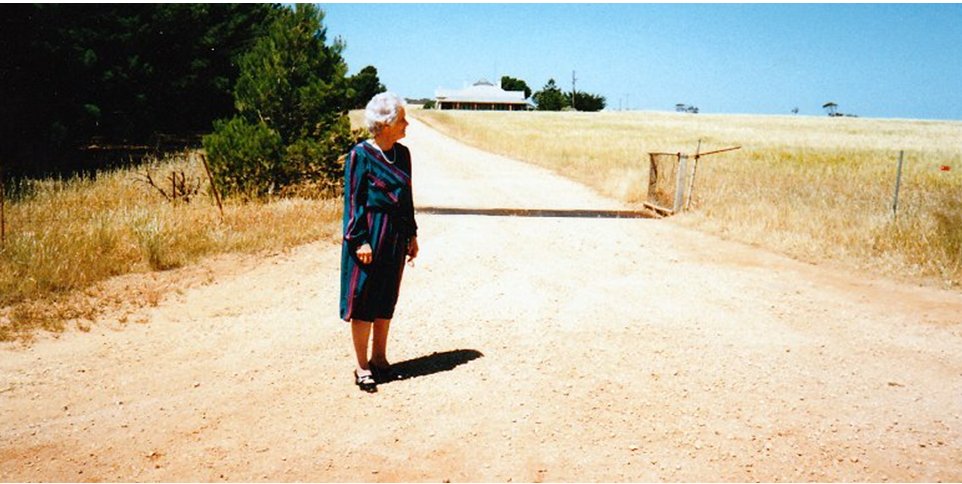
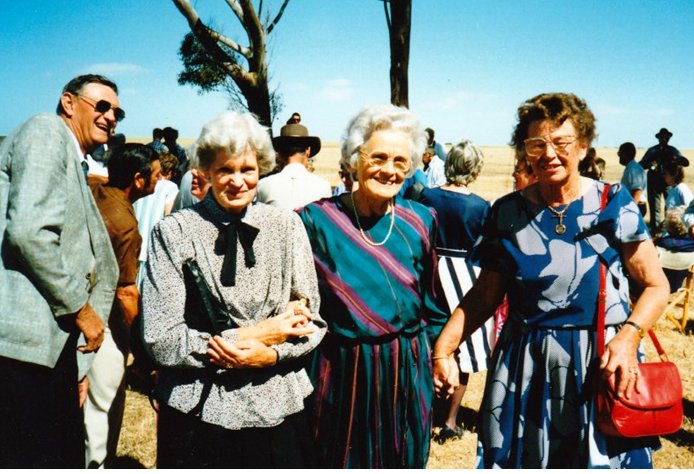
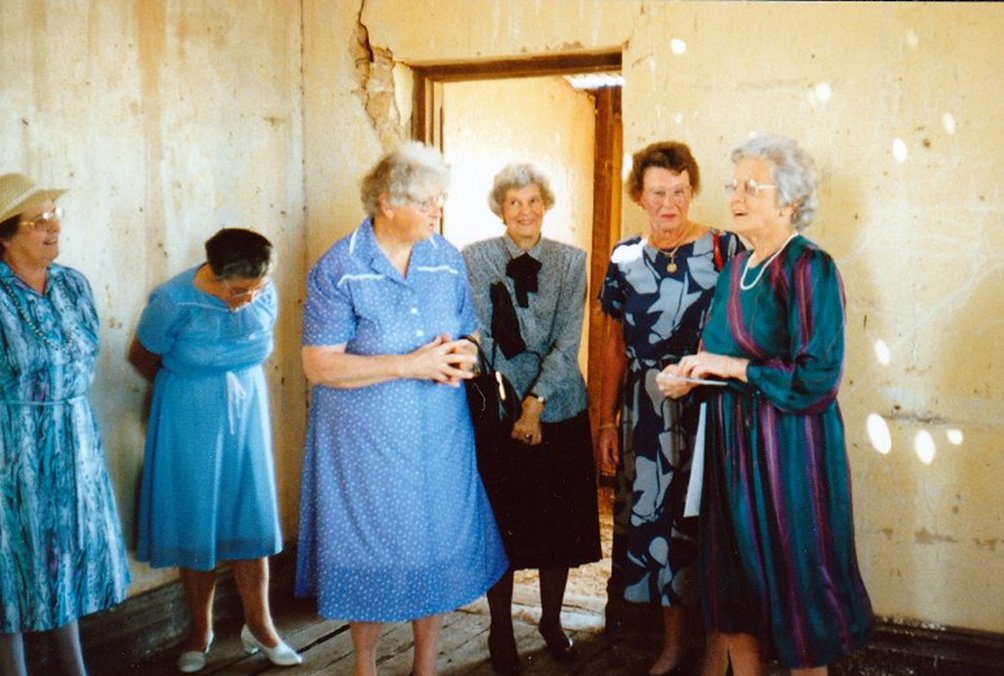
The reunion was a wonderful and very memorable event.
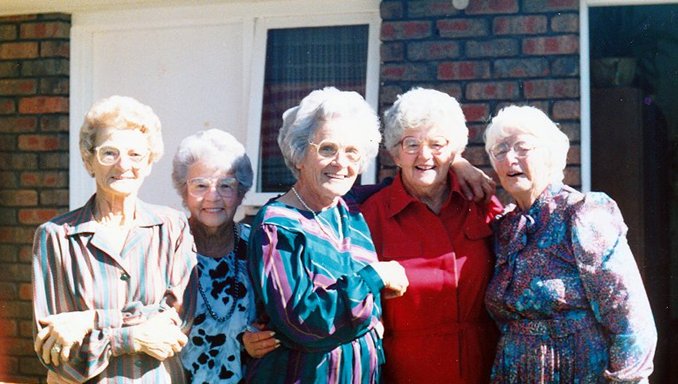
The photos speak of the enjoyment experienced at this special reunion and the affection between all members.
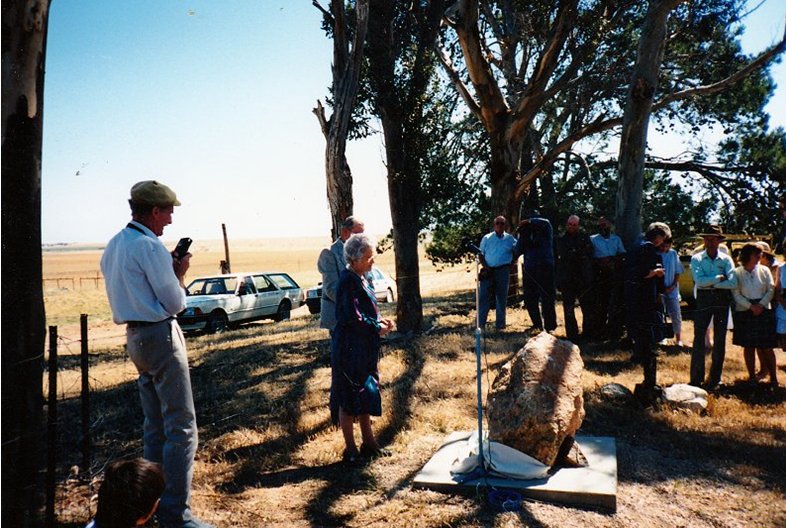
The teacher and students look as though they could be sisters. Beautiful people.
I posted questions about Wheatleigh on Facebpook in 2022 and a child of an ex student responded saying that the building has suffered from some vandalism over the years and the last time this she visited this old building there were two owls living in it. How appropriate.
In 1936 Mary was appointed to Burnbrae in the South East.
 Moyle Family History